Cap and Chain for LC Mating Sleeves
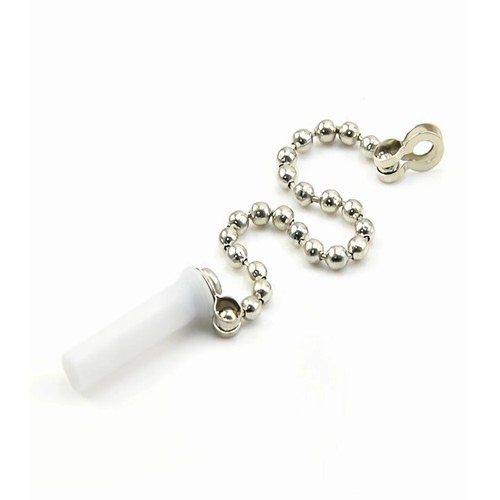
For Pakistani procurement and engineering teams, the specification provides a practical basis for checking compatibility before production is requested. Cap and Chain for LC Mating Sleeves belongs to the small hardware that keeps a fiber plant healthy between moves and changes. Dust, handling and open ports are the everyday enemies of optical behavior; the right caps, chains and mounting clips keep connector end faces clean and adapters seated until the day the port goes live.
Specifications
| Color | White |
|---|---|
| Material | Plastic |
| Durability | ≥ 500 (cycles) |
| Operating Temperature | -20 to 70℃(-4 to 158℉) |
| Storage Temperature | Room Temperature |
| Connectors(1) | Q: |
| Connector:SC | The service was very good and company had very helpful staff. I recommend this company. |
Why the alignment sleeve decides adapter quality
Each optical adapter is, at heart, a sleeve alignment problem: two connector ferrules must meet on one axis with their end faces touching, and any eccentricity shows up directly as insertion loss. Zirconia ceramic is the standard sleeve material since it machines to sub-micron tolerance, resists wear across repeated matings and holds its dimensions through temperature swings. The adapters in this range use zirconia sleeves rated for insertion loss of 0.2 dB or better, which keeps an adapter pair well inside any optical loss calculation.
Dust caps as a working discipline
Each contamination investigation ends at the identical place: an end face that sat open to the air. Dust caps exist to close that gap, and they only work when the discipline is real - the cap goes on the moment the optical interface comes out, each time, no exceptions for "just a minute". Caps cost almost nothing; the cleaning rounds and the re-polished connectors they prevent cost real labor. Treat caps as part of the optical interface, not as packing to throw away.
Small hardware that keeps panels serviceable
Adapter accessories cover the gaps the catalog hardware leaves: caps that keep unused ports clean, chains that keep the cap attached to this adapter panel so it cannot walk away, mounting clips that adapt one footprint to a different cutout. None of these parts carry light, yet the plant fails without them - a missing cap becomes a contaminated port, a missing clip becomes an adapter that cannot mount. Keep the accessories stocked with the adapters they serve.
What adapter testing actually measures
An adapter contributes no signal of its own, and therefore its test is a mating test: reference connectors mate through the adapter housing, and the inserted loss is recorded. A zirconia-sleeve adapter ought to add no more than 0.2 dB, and the mating must repeat that figure across cycles. Durability testing runs the mating hundreds of times and re-measures - a sleeve that wears loose announces itself as creeping loss. These figures, not the housing color, are what separates an adapter that serves for years from one that becomes the mystery fault.
Selecting the right adapter for the panel
Five decisions define the adapter housing order: the optical interface pairing must be aligned with the two sides of the mating, the mounting style must fit this adapter panel cutout, the polish color code must be aligned with the plant, the sleeve material must suit the behavior grade, and the count must cover the load-out plus spares. Getting all five right at order time is what turns a bag of couplers into a dependable panel. Where the pairing crosses connector families, the hybrid range covers the common conversions.
Test Standards and Quality Control
Each adapter is inspected before packing: the sleeve bore is checked for alignment and surface finish, the housing latches are cycled for positive engagement, and sample matings from every production lot are measured for insertion loss. Accessories are checked for fit against the adapters they serve.
Ordering Details and Factory Support
Refer to this adapter by connector pairing, mounting style, polish grade and pack number of units when specifying a quotation. For configurations outside the listed options - mixed packs, panel hardware kits or project packing - send the specification with the request and the factory will make certain of the manufacturable specification. For Pakistan, a clear port or maintenance schedule helps us confirm the correct factory-built configuration before supply.


