LC UPC Duplex OS2 Fiber Adapter without Flange
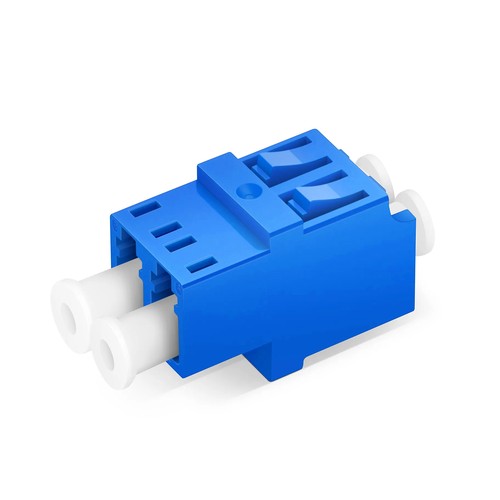
For Pakistani procurement and engineering teams, the specification provides a practical basis for checking compatibility before production is requested. LC UPC Duplex OS2 Fiber Adapter without Flange couples two LC/UPC connectors into one continuous optical route. Inside the housing, a zirconia ceramic sleeve holds the two ferrules on a common axis, keeping insertion loss low and stable across hundreds of mating cycles. The flangeless housing snaps into this adapter panel cutout, saving the screw hardware and speeding up panel unit.
Product Highlights
- Available in A Variety of Connector Types
- ≤0.2dB(Typical) Low Insertion Loss
- Color Coded for Rapid Fiber Management
- Protective Dust Cap Keeps Adapter’s Interior Clean from Dust
- Plastic Buckle for Tool-less Snap-in Installation
Specifications
| Connector Type | LC-LC |
|---|---|
| Body Style | Duplex |
| Polish Type | UPC |
| Fiber Mode | OS2 9/125μm |
| Insertion Loss | ≤0.2dB |
| Durability | 500 times |
| Mounting Type | Reduced Flanged |
| Color | Blue |
| Flammability Rate | UL 94V-0 |
| RoHS Compliancy Status | Compliant |
| Operating Temperature | -40 to 85℃ (-40 to 185℉) |
| Storage Temperature | -10 to 60℃ (14 to 140℉) |
| Connector Type | LC/UPC |
| Body Style | Duplex |
| Fiber Mode | SM OS2 |
| Insertion Loss | ≤0.2dB |
Phosphor bronze and zirconia sleeves compared
Two sleeve materials dominate the adapter housing market. Zirconia ceramic sleeves give the tightest alignment and are the suitable option for single-mode and high-behavior multimode work, where core geometry leaves no room for eccentricity. Phosphor bronze sleeves serve legacy multimode and metallic-ferrule connectors where the tolerance specification is looser and the cost matters more. Matching the sleeve to the application keeps the two behavior and budget under control.
Panel cutouts and footprint discipline
Adapter panels are standardized around a handful of footprints, and the SC simplex footprint is the most common: duplex LC adapters are built to drop into the identical cutout, which is why LC and SC positions interchange freely on modern frames. Keeping to the standard footprint matters when a panel is re-loaded years later - the replacement adapter must fit the hole that is already there.
UPC and APC discipline at the adapter
The adapter housing has no polish of its own, but it is where polish discipline succeeds or fails: mating a UPC connector to an APC connector through any adapter damages the two end faces and wrecks return loss. Color coding exists to prevent exactly that - green housings for APC, blue for UPC single-mode - and the discipline only works when the whole plant follows it. Keep the adapter housing color, the optical interface boot color and the documentation consistent, and the mixing mistake becomes nearly impossible.
What adapter testing actually measures
An adapter contributes no signal of its own, and therefore its test is a mating test: reference connectors mate through the adapter housing, and the inserted loss is recorded. A zirconia-sleeve adapter ought to add no more than 0.2 dB, and the mating must repeat that figure across cycles. Durability testing runs the mating hundreds of times and re-measures - a sleeve that wears loose announces itself as creeping loss. These figures, not the housing color, are what separates an adapter that serves for years from one that becomes the mystery fault.
Selecting the right adapter for the panel
Five decisions define the adapter housing order: the optical interface pairing must be aligned with the two sides of the mating, the mounting style must fit this adapter panel cutout, the polish color code must be aligned with the plant, the sleeve material must suit the behavior grade, and the count must cover the load-out plus spares. Getting all five right at order time is what turns a bag of couplers into a dependable panel. Where the pairing crosses connector families, the hybrid range covers the common conversions.
Test Standards and Quality Control
Each adapter is inspected before packing: the sleeve bore is checked for alignment and surface finish, the housing latches are cycled for positive engagement, and sample matings from every production lot are measured for insertion loss. Accessories are checked for fit against the adapters they serve.
Ordering Details and Factory Support
Refer to this adapter by connector pairing, mounting style, polish grade and pack number of units when specifying a quotation. For configurations outside the listed options - mixed packs, panel hardware kits or project packing - send the specification with the request and the factory will make certain of the manufacturable specification. For Pakistan, a clear port or maintenance schedule helps us confirm the correct factory-built configuration before supply.


